

Blockchain Development Services 

We engineer blockchain as infrastructure for ownership, verification, and trust.

Blockchain is a capability here, not an identity. We start from the problem: what has to be verifiable, who has to own it, and which part of the system genuinely needs to be decentralized. Usually that is a narrow slice. We build the rest as ordinary, reliable software, and we say so.

Blockchain Development Services We Provide

Seven areas of work. Most projects use two or three of them.
01 / 07
Blockchain applications
Products with on-chain state at their core, held to the same standard as any production application.
02 / 07
Smart contracts
Contract design, implementation, and testing, with permissions, upgrade paths, and failure cases decided before deployment.
03 / 07
On-chain automation
Services and agents that watch chain state and carry out the next step without someone having to notice first.
04 / 07
Web3 applications
Wallet connection, signing, and account handling built to stay legible to people who are not crypto-native.
05 / 07
Decentralized infrastructure
Nodes, RPC layers, indexers, and the monitoring that tells you when one of them is quietly wrong.
06 / 07
Blockchain data systems
Indexing, reconciliation, and analytics that turn raw events into data your team can actually query.
07 / 07
Tokenized systems
Built where a token solves a real coordination or ownership problem, and left out where it does not.

The oracle layer

In a decentralized system, an oracle is the component that carries outside reality onto the chain. It is also where most systems are weakest: a contract can only be as correct as the information it is handed.

We treat that boundary as an engineering problem, covering sourcing, validation, redundancy, latency, and what happens when a feed goes quiet. Then we build the intelligent systems that sit on either side of it, so a verified fact becomes an action rather than a record nobody reads.
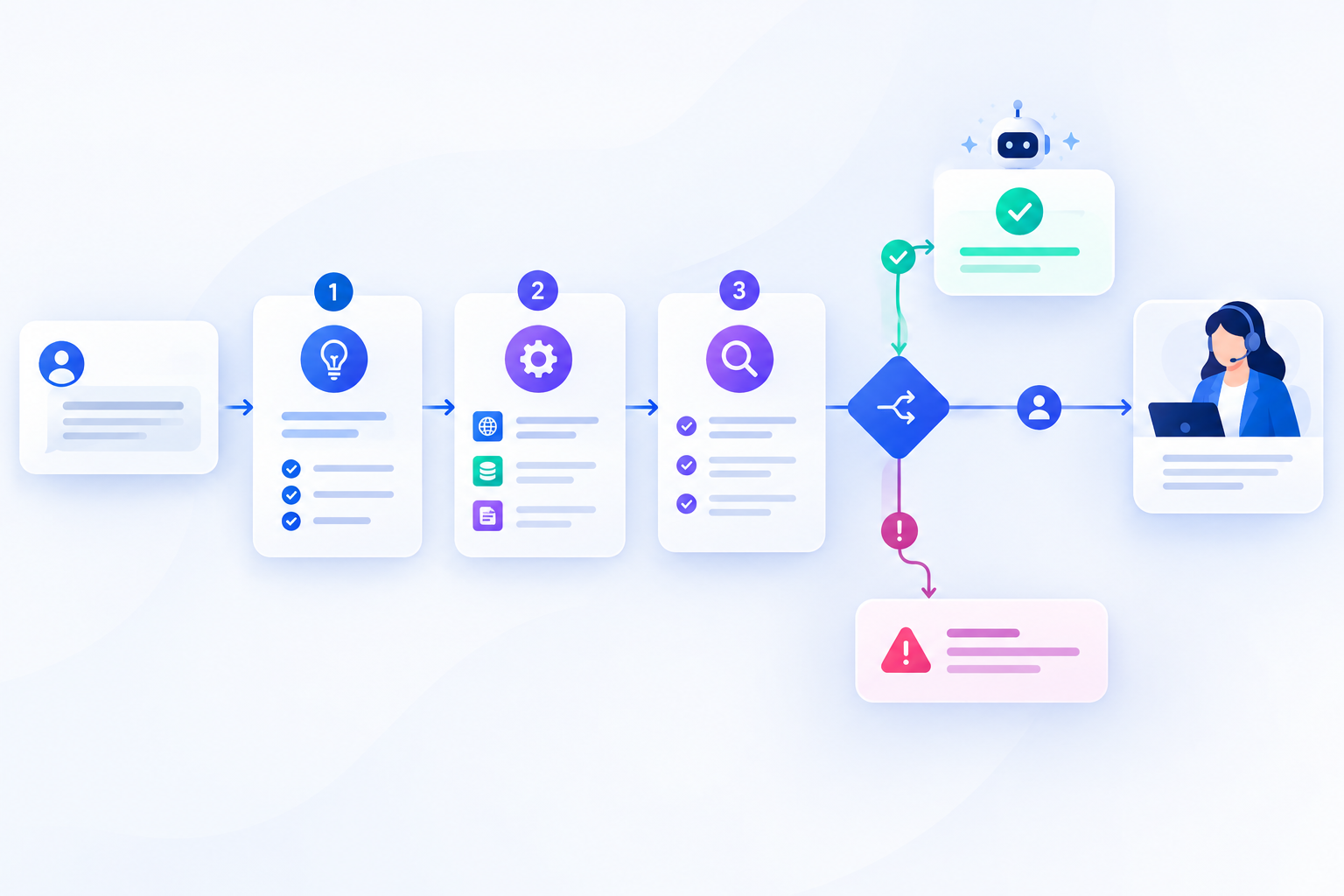
How We Engineer Blockchain Systems

Four stages, in order. Nothing reaches mainnet before the one above it is settled.
STAGE ONE

Map the trust boundary

Decide what must be verifiable on-chain, what should stay off it, and who the system has to be trustworthy to.

STAGE TWO

Design contracts and data

State, permissions, upgrade paths, and failure behaviour specified in writing before any of it is coded.

STAGE THREE

Build the wider system

Indexers, services, agents, and interfaces, with the chain treated as one dependency among several.

STAGE FOUR

Deploy and keep watch

Staged rollout, external review before mainnet, monitoring on state and cost, and a defined human override.

How We Handle Risk in Blockchain Development

Value that moves without a person watching deserves more care than a demo. These are working practices, not certifications.

Contracts reviewed externally before mainnet deployment.

Key management and signing authority written down, not improvised.

Upgrade and pause paths agreed before launch, including who may use them.

Chain state, gas, and failure rates monitored like any other production system.

Human oversight on anything that moves value or cannot be reversed.

We describe how a system is built rather than claim guarantees we have not verified.

Tell us what has to be verifiable

We will tell you honestly which part of it belongs
on a chain, and what the rest of the system should look like.

Frequently Asked Questions About Blockchain Development

When does a project actually need blockchain technology?
Blockchain makes sense when ownership, verification, coordination, or shared state genuinely needs to be decentralized. We first identify what needs to be verifiable on-chain and what is better handled through conventional software.
Can blockchain be integrated with existing systems?
Yes. Blockchain can work alongside APIs, databases, indexers, services, agents, and existing applications. The chain is treated as one part of the wider system rather than the entire architecture.
What are smart contracts used for?
Smart contracts can define and enforce on-chain rules, permissions, state changes, and automated actions. Contract behaviour, upgrade paths, and failure cases should be established before deployment.
How do you handle security and risk in decentralized systems?
We address contract review, key management, signing authority, upgrade and pause mechanisms, monitoring of chain state and costs, and human oversight for actions that move value or cannot be reversed.
What role do oracles play in blockchain systems?
Oracles bring information from the outside world onto a blockchain. We focus on how that information is sourced, validated, made redundant, and handled when a data feed becomes unavailable or unreliable.